Engineering consulting services play an integral role in advanced projects. They do much more than deliver long-term solutions that are cost-efficient and risk-proof. In today’s world, where corporate competition is high, consulting engineers quietly help companies navigate the complex business ecosystem by mitigating potential challenges through effective measures.
This comprehensive guide will share insights into its definition, core responsibilities and benefits, and effective ways to choose the right engineering systems solutions.
What Are Engineering Consulting Services
This is the specialized services provided to solve specific engineering challenges. They are, essentially, a team of seasoned engineering professionals who perform all the critical tasks apart from the actual on-field work. They advise on the causative factors and suggest relevant measures to mitigate them, helping businesses save cost, time, and capital.
For a better understanding, let’s assume an aircraft manufacturing company is experiencing overheating issues in its gas turbine engine. They hire an engineering consulting firm, which then recommends applying thermal barrier coatings to the combustor liners and turbine blades. After implementing that solution for a certain period, the company observed a significant reduction in temperatures, resulting in improved thermal and mechanical efficiency.
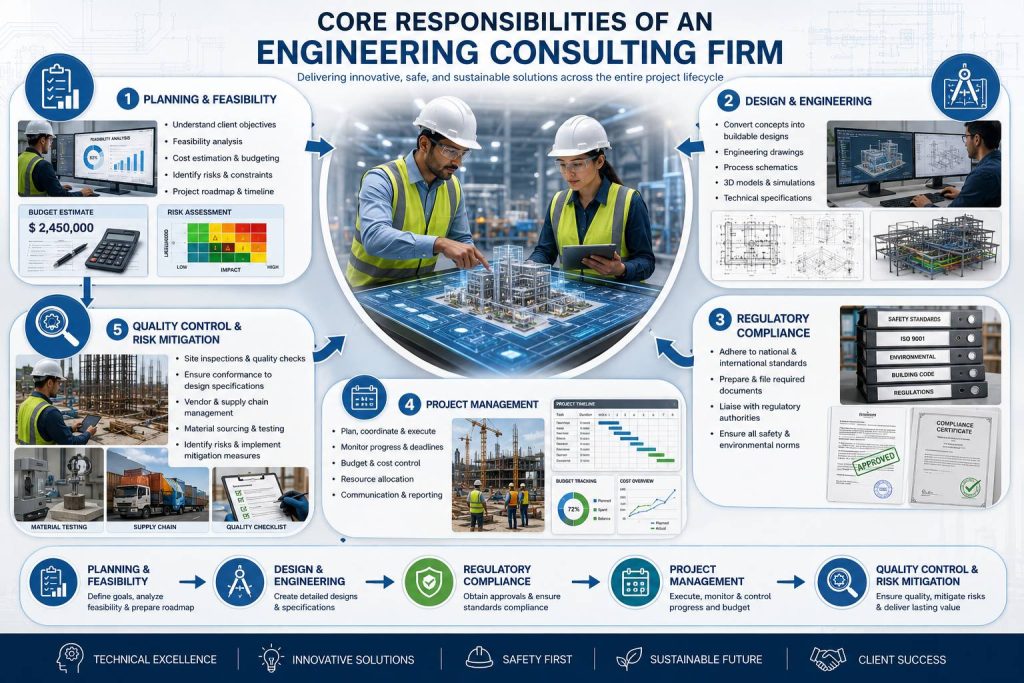
Core Responsibilities of an Engineering Consulting Firm
The core responsibilities of an engineering consulting firm span the entire project lifecycle, ranging from planning to implementation and maintenance services.
1. Planning and Feasibility
They understand the feasibility of the project based on the client’s objectives. Accordingly, they devise the cost structure and roadmap by identifying the associated risks and constraints.
2. Design and Engineering
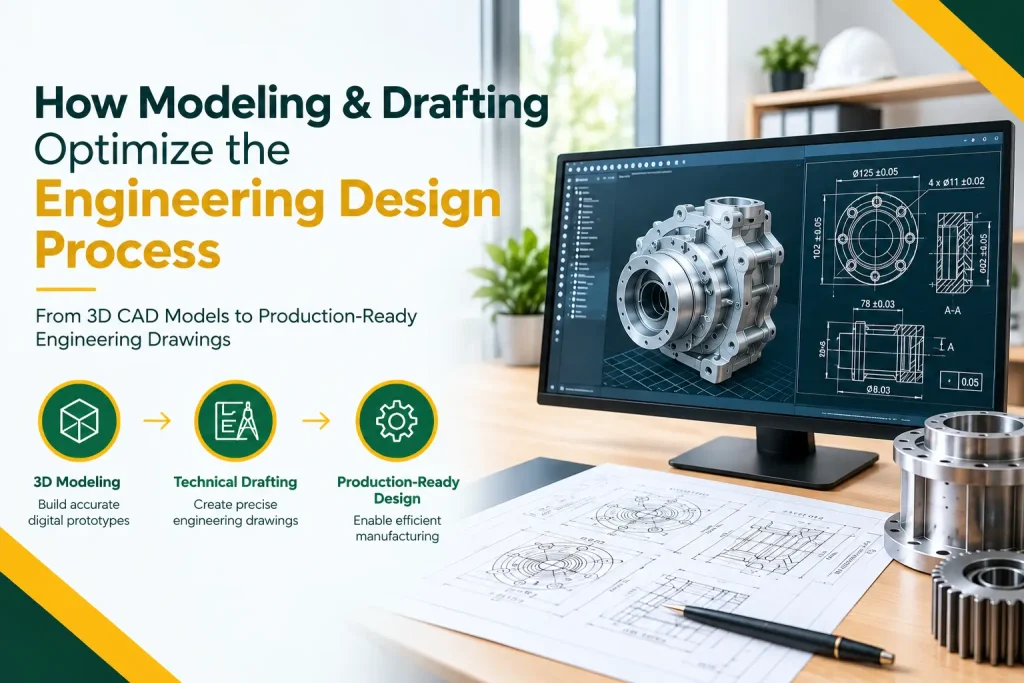
They translate those planned concepts into actionable, buildable specifications by creating their blueprints through engineering drawings, process schematics, and engineering system solutions tailored to project requirements.
3. Regulatory Compliance
They ensure that all project parameters stringently adhere to local, national, and international standards. To meet this obligation, they prepare and file the necessary documents with the relevant regulatory authorities.
4. Project Management
They monitor the smooth implementation of the project, ensuring it stays within an assured deadline and aligns robustly with the proposed budget.
5. Quality Control and Risk Mitigation
They frequently visit the project site to analyze if the ongoing project matches the design specifications. They source vendors, manage supply chains, and acquire raw materials.
Key Benefits of Partnering With an Engineering Consulting Company
Partnering with the right engineering consulting company brings a wealth of experience, in addition to the cost-efficiency and SMART (Specific, Measurable, Achievable, Relevant, and Time-bound) outcomes.
1. Specialized Engineering Expertise
Engineering consulting companies have an expert team of specialized engineering professionals who have experience working across a diverse range of industries. Their expertise in areas such as mechanical engineering solutions can assist businesses in mitigating vulnerabilities that otherwise aren’t feasible for in-house staff to address.
2. Optimized Project Costs
Hiring a full-time engineer can be tedious, as you need to cover their complete payroll. Engineering consulting companies, on the other hand, work only when required and provide significantly better solutions under a customized budget.
3. Accelerated Time-to-Market
These firms leverage external project management and established vendor channels to streamline product development and ensure timely launches.
4. Independent Technical Insights
Imagination and creativity often diminish when the team works together for a sustainable period. Engineering consultants bring fresh perspectives to the table and solutions that are hard for the in-house team to identify.
5. Timely Project Delivery
Internal employees might be occupied with critical tasks or on leave. Consulting firms are specifically hired to perform a specific project, irrespective of the circumstances.
How to Choose the Right Engineering Consulting Partner for Your Project
Choosing the right engineering consulting partner involves aligning their specific domain expertise, technical capabilities, and project management processes with your core goals.
1. Define Your Technical & Business Goals
Before beginning your search, it’s crucial to identify the engineering discipline you are aiming for, the key deliverables required, and potential engagement models (fixed-cost, time-and-materials, or dedicated team).
2. Additional Technical Expertise
Beyond conventional engineering knowledge, assess their familiarity with market trends, modern technologies, and advanced engineering systems solutions relevant to your project. For this, you can review their case studies and check for industry certifications.
3. Evaluate Communication and Collaboration
Communication plays a pivotal role for any engineering consulting firm. They should be able to convey the important details to stakeholders effortlessly. Furthermore, confirm which project management tools they use and check their time zone overlap and responsiveness during your business hours.
4. Assess Long-Term Value and Scalability
You are investing your money and capital in a consulting firm, so make sure it’s worth it for a sustainable period. Evaluate their ability to scale their team size based on your dynamic project phases. Assess whether they offer post-deployment support.
5. Check Financial Stability and Risk Management
A reliable partner must have the structural health to support your project through completion. Request proof of professional liability insurance to cover errors and omissions. Verify their financial solvency to ensure they will not face sudden cash flow disruptions.
Conclusion
Professional engineering consultancy isn’t just the trend; they are the essential cornerstone of the modern corporate world. They assist businesses across all phases of the project, ranging from planning to maintenance support. However, choosing the right engineering consulting partner can be somewhat complex, given the number of players in the market.
Dansob, a leader in state-of-the-art engineering consulting services, has empowered numerous enterprises to achieve their business goals confidently. Consult today and become a proud contributor to this profound legacy.
FAQs
- How long does an engineering consulting engagement typically last?
The duration of the engagement depends on the project scope and type. Typically, it takes around 2-12 weeks for short-term engagement and 3-18 months for multi-phase implementations.
- Can engineering consultants work alongside existing in-house teams?
Yes, engineering consultants can work with existing in-house teams, commonly referred to as hybrid or integrated models, where companies merge their internal institutional knowledge with specialized external expertise to accelerate project delivery.
- What industries benefit most from mechanical engineering solutions?
The industries that benefit the most from mechanical engineering solutions include manufacturing, automotive, aerospace, and energy.
- Can small businesses afford professional engineering advisory services?
Yes, small businesses can afford professional engineering services, which allows them to pay only for the exact expertise they require.
- How is consultant performance measured throughout the project lifecycle?
Consultant performance is measured through a mix of quantitative KPIs (budget, schedule, and resource utilization) and qualitative metrics (deliverable quality and client satisfaction).