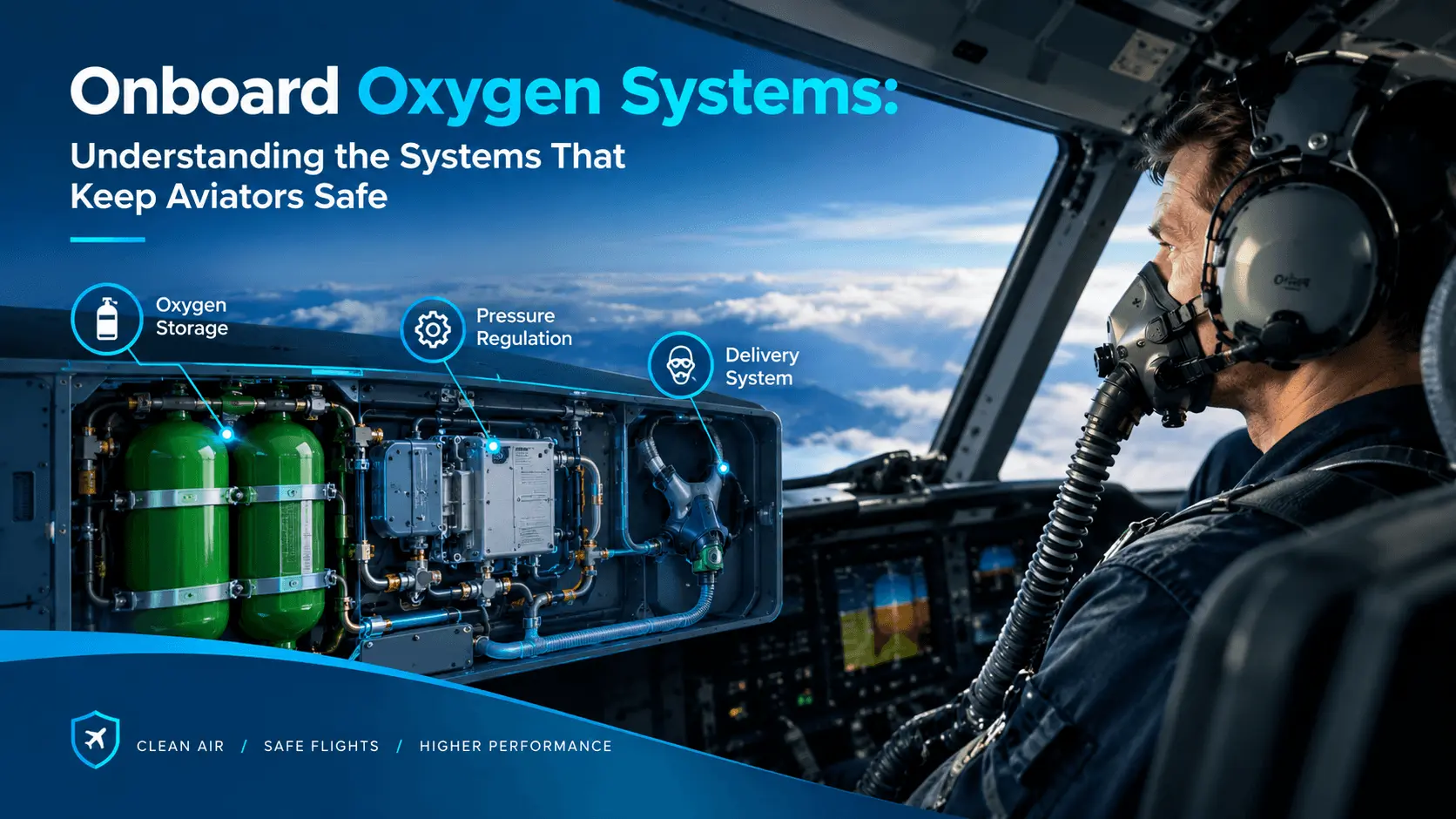
When an aircraft flies at a high-altitude, the air pressure becomes quite low. It can cause difficulty in breathing for the pilots and passengers. Carrying heavy tanks of liquid oxygen might not be a practical thing to do. Modern aerospace engineering services require the use of an onboard oxygen generating system (OBOGS). These systems were first adopted in the 1980s. They utilize engine bleed air and Pressure Swing Adsorption (PSA) technology and filter out nitrogen.
This filtering process generates a continuous breathing gas consisting of roughly 95% oxygen and 5% argon. But it’s essential to keep air supplies clean. This is because pollutants can enter into the mechanical systems. They can make it difficult to ensure safety for those inside the aircraft. Keeping the aircraft structure in good condition and removing unwanted elements from the system helps ensure safety during operations.
What Exactly is an OBOGS and How Does It Work?
OBOGS is a highly advanced machine that removes small particles. It purifies the air already surrounding the aircraft’s propulsion systems.
-
Sourcing the Air
The process begins by drawing compressed “bleed air” directly from the aircraft engine compressor before it reaches the combustion chamber.
- The Sieve Separation
This hot, pressurized air is cooled and routed into molecular sieve beds packed with synthetic zeolite. - Pressure Swing Adsorption (PSA)
The zeolite material makes the chemicals stick to it under high pressure. This is because it acts like a magnet. It allows nitrogen molecules to stay inside. But the Oxygen and argon pass through freely. - The Exhaust Cycle
The system allows the pressure to move out when the sieve bed is full of nitrogen. It removes the nitrogen inside and prepares the bed again for the next cycle.
The system ensures a smooth flow of gas in the mask for the pilot’s breathing. It uses two or more beds to maintain this flow.
What Real-World Incidents Have Shaped OBOGS Safety?
OBOGS Technology has made it easier to stay longer on the flight. It provides a continuous supply of breathing air and addresses mechanical problems. It puts aircrews in serious danger.
- The F-22 Raptor Grounding (2011)
The US Air Force saw various events where pilots experienced symptoms similar to hypoxia. The Commander of Air Combat Command restricted the F-22’s maximum altitude to 25,000 feet before executing a comprehensive 5-month grounding of the entire F-22 fleet in 2011. A formal review documented by GovInfo revealed the unique lack of a backup breathing reservoir. It is combined with structural pressure drops in the life-support garments, which cause severe breathing constraints.
- The Navy T-45 Goshawk and F/A-18 Incidents (2017)
In 2017, the U.S. Navy faced widespread safety stand-downs after flight instructors and pilots refused to fly due to a surge in breathing gas contamination. Investigation records published via the Homeland Security Digital Library showed that the aircraft were not consistently providing clean, dry air to the OBOGS units. Moisture and trace chemical degradation within the recycled molecular sieve beds allowed toxins to bypass the filtration system, inducing sudden dizziness in mid-flight. - The Ongoing Naval Aviation Fleet Monitoring (2024-2025)
Physiological episodes (PEs) caused by cabin pressure fluctuations and breathing air contamination remain a top-flight safety priority. To prevent localized system failures from leading to pilot incapacitation, the U.S. Indo-Pacific Command / Naval Aviation Enterprise tracked system irregularities closely throughout 2024 and 2025. This multi-year initiative forced an “unconstrained resource” approach to redesigning real-time biosensing pilot apparel and advanced cockpit oximetry filters, ensuring trace oil vapors or pressure variations are caught before affecting aircrews.
Where is OBOGS Technology Used Today?
Although military fighter jets are the most high-profile users of this technology, onboard oxygen generation has a broad reach across the aerospace, defense, and emergency response sectors.
- Modern Combat Aircraft
It serves as the safe standard life-support architecture on front-line platforms like the F-22, F-35, F/A-18 Super Hornet, and Eurofighter Typhoon, eliminating the dangerous logistical need to transport volatile liquid oxygen to forward combat zones. - Aeromedical Evacuation
Highly portable, ruggedized variations of PSA oxygen generators are deployed on military transport planes to refill medical cylinders and support wounded personnel during long-range flights. - Civilian Spin-offs
The exact same defense-born PSA technology has been adapted for ground-based medical use. For instance, during global health crises, portable oxygen plants derived directly from aircraft designs were deployed to rapidly scale up hospital oxygen supplies.
What Safety Regulations Govern Onboard Oxygen Systems?
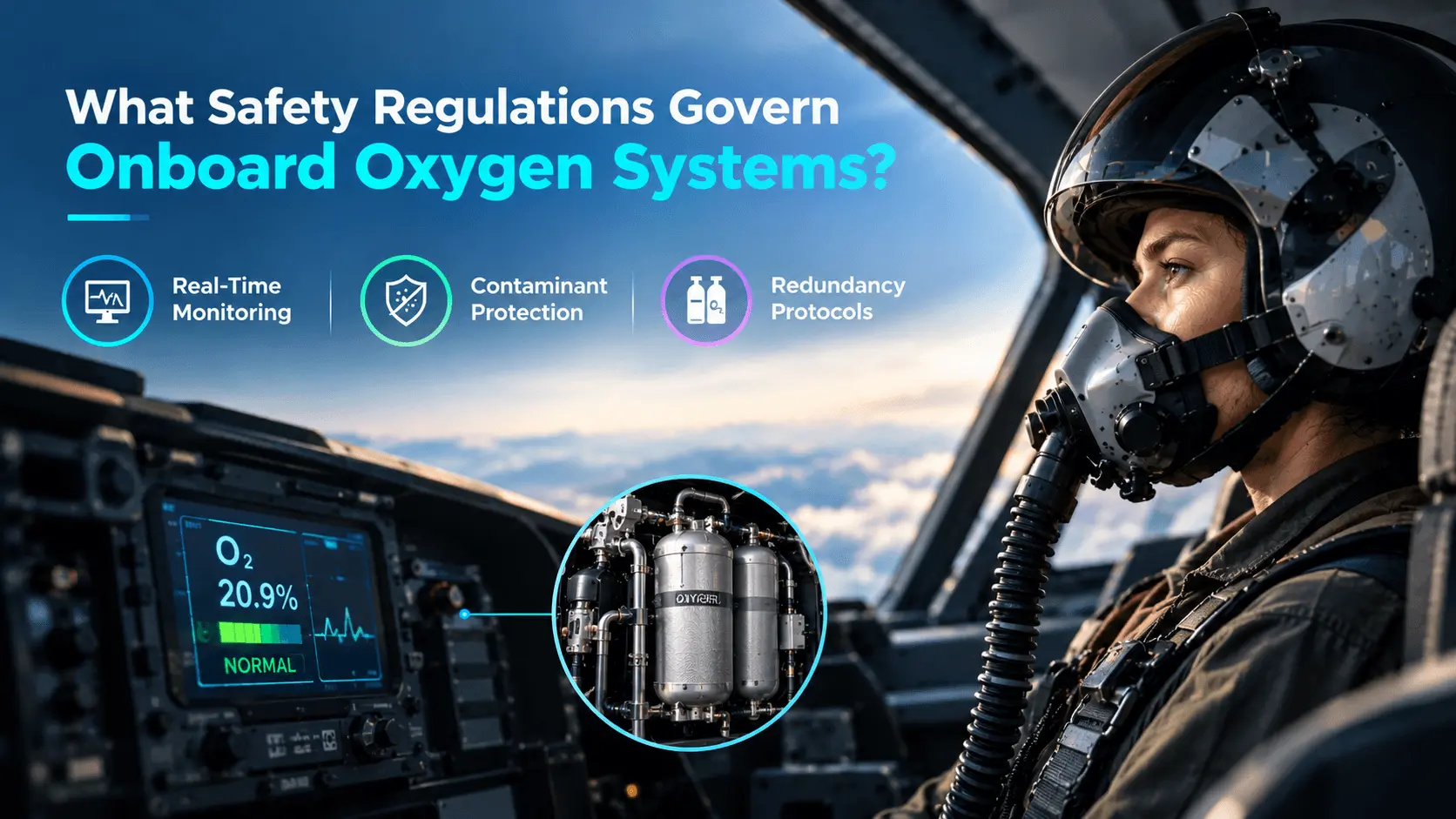
A single failure in a pilot’s breathing air supply can cause an issue. Safety certifications for these installations are among the tightest in the entire engineering world.
-
Real-Time Monitoring
Modern aviation guidelines require the integration of digital oxygen sensors that continuously calculate the exact oxygen partial pressure being delivered to the mask. Trigger immediate visual alerts if concentrations dip below safe thresholds.
- Contaminant Protection
Regulations mandate strict environmental testing to guarantee that the system can handle extreme g-forces and temperature spikes without allowing pyrolyzed engine oil, fuel vapor, or cabin fumes to bleed into the breathing supply. - Redundancy Protocols
Current military and aerospace design standards demand secondary emergency oxygen cylinders built directly into the ejection seat or airframe to provide an independent air supply if the main engine bleed system fails.
Partnering with the Best: Dansob’s Aerospace Technologies
Building error-free life support and environmental systems requires using components that can withstand extreme environmental pressure. Dansob’s aerospace technology provides the precision-engineered parts and advanced systems needed to keep complex aircraft equipment running safely.
- Unmatched System Reliability
Dansob specializes in creating rugged, highly accurate parts that meet strict aerospace safety certifications. - Seamless Integration
Whether dealing with environmental control units, bleed air pathways, or pressure management components, their solutions integrate smoothly into tight aircraft layouts. - Proven Industry Expertise
With a deep focus on safety-critical applications, Dansob provides the foundational engineering support needed to protect aircrews in the most demanding flight environments.
Final Thoughts
As aviation moves toward longer flights and smarter, self-sustaining aircraft, technologies like OBOGS will remain vital. Ensuring these complex systems operate without a single point of failure requires looking at every valve, seal, and manifold with absolute precision.
By working alongside established engineering leaders like Dansob, aerospace developers can continue to push the boundaries of high-altitude flight while keeping pilot safety firmly protected.
FAQs:
1. What does OBOGS stand for in aviation?
OBOGS stands for Onboard Oxygen Generating System. It is an automated system built into modern aircraft to filter and supply breathable, oxygen-rich air directly to the pilot during flight.
2. How does an onboard oxygen generator work?
It takes compressed air from the aircraft’s engine and passes it through synthetic filters called zeolite beds. These beds pull out nitrogen and leave behind concentrated oxygen for the pilot to breathe.
3. Why did the military switch from liquid oxygen to OBOGS?
Liquid oxygen tanks require massive, complex storage setups on the ground and constant refilling. OBOGS makes its own oxygen indefinitely while the engine runs, dramatically lowering maintenance time and supply costs.
4. Can an OBOGS run out of oxygen?
No, as long as the aircraft engine is running and providing air to the system, it will continue to generate oxygen. However, aircraft still carry a small backup oxygen tank in case the main engine air supply fails.
5. What are Unexplained Physiological Events (UPEs)?
UPEs are incidents where a pilot experiences symptoms like dizziness, confusion, or breathing trouble while flying. They are often linked to minor air pressure changes or trace contaminants slipping into the breathing mix.
6. What percentage of oxygen does an OBOGS provide?
The system generally delivers a gas mixture that is about 95% pure oxygen and 5% argon, which is more than enough to safely keep a pilot alert and fully conscious at high altitudes.
7. Who certifies the safety of these systems?
Aerospace life-support systems undergo strict testing and certification by military review boards, federal aviation agencies, and engineering safety centers like NASA to verify they can handle extreme flight forces.