Modern companies require their product development process to deliver accurate results that can be consistently replicated while maintaining complete transparency. Engineering analysis functions as the fundamental requirement to achieve these objectives. Structured evaluation methods enable businesses to decrease uncertainty throughout their products’ or systems’ design and manufacturing processes.
Engineering analysis capabilities are utilized during the product/system’s first development phase to test the performance and prevent expensive errors. The analysis process begins with an idea, which develops into a dependable system through research-based decision-making.
Companies that concentrate on engineering design and analysis work to protect their financial resources, maintain their project timelines, and safeguard their business reputation while developing products and systems that have better performance, safety, and durability.

The Growing Complexity of Modern Engineering Systems
The present-day products and systems must function in demanding operational conditions. The products must withstand greater loads while maintaining precise specifications and complying with stricter industry rules. The engineering teams must control this complex situation through scientific design and analysis methods. The most common challenges faced by businesses are:
- Rising cost of raw materials and manufacturing
- Shorter development timelines
- Higher safety and compliance expectations
- Complex system integration across different disciplines
Without structured evaluation, these challenges increase failure risks. Analysis provides clarity by testing designs before physical production begins.
What Engineering Analysis Really Means for Businesses
Engineering analysis evaluates product performance through real-world testing methods. The process replaces assumptions because it uses measurable data to achieve accurate results.
For businesses, this means:
- Predictable product performance
Engineering analysis provides businesses with complete knowledge about product performance from its initial development stage until its final operational usage.
- Fewer design iterations
Engineering design and analysis examines different design concepts during its early stages, which will detect design problems, leading to less frequent project modifications, saving time and fewer design iterations.
- Reduced dependency on physical prototypes
Virtual testing enables testing without using multiple physical prototypes, which results in time and material cost savings and development work savings.
- Improved decision-making across teams
The engineering, management, and production teams can make better decisions through quicker decision-making processes, which result from accurate analysis of data.
Engineers use analysis to align technical performance with business goals. It ensures that products meet functional requirements while remaining cost-effective.
How Engineering Analysis Reduces Design Risk
Risk increases when design decisions rely on incomplete data. Analysis identifies weak points early and prevents downstream issues.
Engineering design and analysis reduces risk by:
- Identifying overstressed components before manufacturing
- Highlighting thermal or vibration issues early
- Evaluating material suitability under real loads
- Detecting unsafe operating conditions
Early detection results in reduced design expenses while preventing product failures. The method provides protection to both end users and product manufacturers.
Cost Reduction Through Early Engineering Validation
Late-stage design changes drive significant cost overruns. Analysis shifts testing and validation to the earliest possible stage.
Cost benefits include:
- Fewer physical prototypes
- Reduced tooling rework
- Lower scrap and material waste
- Shorter testing cycles
Businesses that rely on professional engineering analysis services gain financial predictability. They control development costs without compromising quality.
Preventing Design Failures Before They Reach Production
Design failures often result from overlooked assumptions. Analysis replaces guesswork with simulation and calculation.
Common causes of failure include:
- Unexpected stress concentrations
- Fatigue damage from cyclic loading
- Thermal expansion issues
- Poor load distribution
Designs receive verification through a structured evaluation, which tests their performance across all operational periods. This method protects organizations from product recalls and warranty claims while maintaining their public image.
Core Engineering Analysis Services That Drive Better Outcomes
Engineering design and analysis encompasses multiple technical areas. Expert firms provide specialized services that address different risk factors.
In our previous blog, we explored Core Engineering Analysis Services. The discussion demonstrated that dependable product design depends on three fundamental methods, which include structural evaluation, simulation, and reliability methods.
-
Structural and Load Analysis
This disclipline evaluates how structures handle mechanical loads and deformation. It ensures components meet strength and safety requirements.
-
Finite Element Analysis
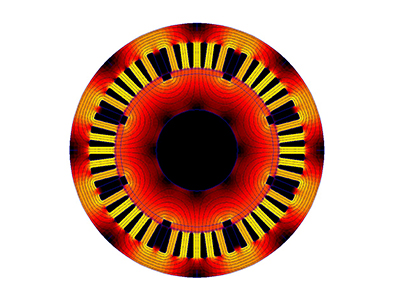
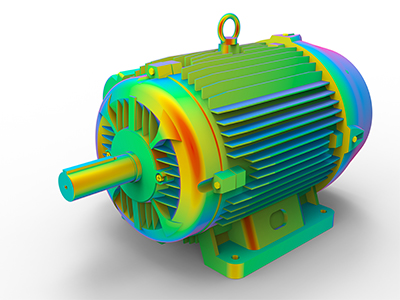
The Finite Element Analysis tool predicts stress, strain, and displacement results while simulating real-world environmental conditions. System engineers use this analysis for validating complex geometries and assemblies of a product’s components.
-
Fatigue and Durability Analysis
This analysis evaluates how repeated loading affects materials over time. It helps estimate lifecycle performance and prevent early failure.
-
Failure and Root Cause Analysis
This analysis investigates why a component failed. It identifies corrective actions that prevent repeated issues.
-
Reliability Engineering
The field of reliability engineering studies both system uptime and the monitoring of equipment failure throughout its operational life. The process analyzes failure mechanisms through statistical metrics, which include MTBF and MTTF.
-
System Safety Engineering
This discipline analyzes hazards across the system lifecycle. It supports regulatory compliance through methods like FTA and PRA.
-
Thermal and CFD Analysis
Thermal analysis evaluates temperature effects on performance. CFD studies fluid behavior to improve cooling and system efficiency
Why Businesses Partner With Engineering Analysis Experts
Organizations enter into partnerships with engineering analysis professionals because they require specialized expertise to address their engineering challenges with respect to time, resource, or subject-matter expertise constraints.
Businesses benefit from external experts through:
- Access to advanced tools and methodologies
- Objective evaluation of designs
- Faster project turnaround
- Cross-industry engineering experience
Experienced engineering analysis companies bring proven processes and domain knowledge. They help organizations scale innovation without increasing risk.

Engineering Analysis as a Strategic Business Investment
Engineering evaluation should not be viewed as an expense. The process functions as a strategic investment that enhances both the quality and reliability of the products and systems.
Strategic advantages include:
- Faster market entry
- Higher customer confidence
- Reduced operational disruptions
- Improved regulatory approval success
Companies that embed analysis into their workflows achieve consistent performance across product lines.
How Dansob Supports Smarter Engineering Decisions
At Dansob, we support businesses across industries with robust engineering design and evaluation capabilities. We apply structured methods to solve complex engineering challenges. We align technical accuracy with business objectives. By focusing on validation and risk reduction, we help organizations deliver dependable products with confidence.
Choosing the Right Engineering Analysis Partner
Selecting the right partner determines the value you receive. Businesses should evaluate providers carefully.
Key selection criteria include:
- Proven technical expertise
- Industry-specific experience
- Transparent communication
- Scalable service models
Leading engineering analysis services providers act as long-term partners. They support continuous improvement, not just individual projects.
The Long-Term Impact of Engineering Analysis
Products that perform reliably build trust and market leadership. Engineering analysis ensures this reliability from concept to deployment.
Long term benefits include:
- Lower lifecycle costs
- Reduced failure incidents
- Stronger brand reputation
- Sustainable product innovation
Organizations that implement structured engineering analysis of their products and services can achieve sustained success because the scientific evaluation methods lead to better performance and reliability outcomes.
Conclusion
Engineering excellence depends on informed decisions. Engineering design and analysis provides the foundation for those decisions. It reduces risk, controls cost, and prevents design failures before they occur.
For B2B organizations, it enables scalable innovation and dependable performance. By partnering with experienced engineering analysis companies like ours, you can transform uncertainty into confidence and ideas into reliable systems.