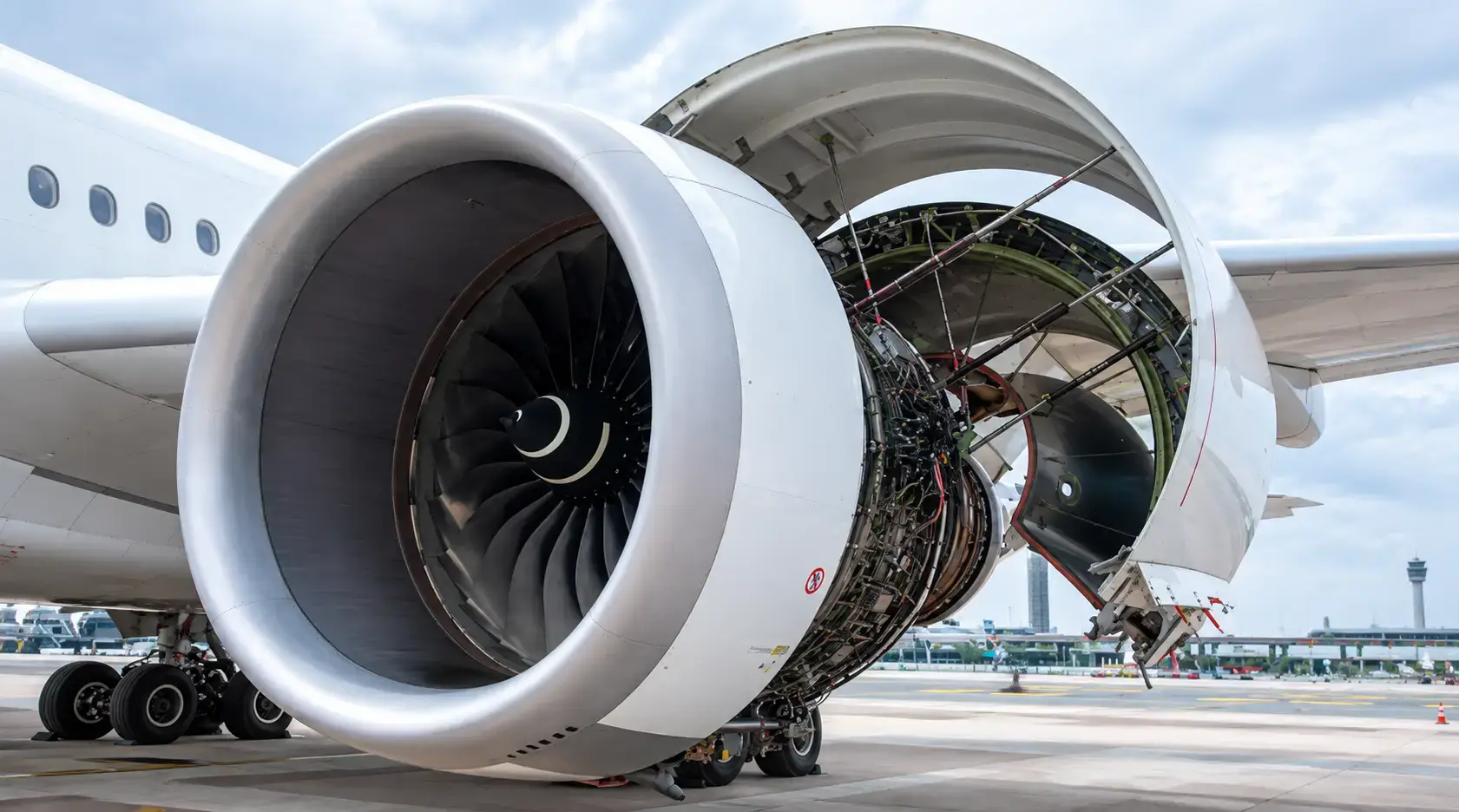
In 2026, AI in aerospace engineering is changing how organizations approach aircraft design, simulation, testing, maintenance, and system development. Artificial intelligence and machine learning help engineers process complex data, evaluate design options, improve predictive maintenance, and support engineering decisions while maintaining established safety and validation practices.
The aerospace industry needs the power of AI to withstand the ever-growing complexity of the systems, the exacting certification times, and the high prices.
We see AI as a practical engineering enabler, not a futuristic concept. As discussed earlier why aerospace and defense technology services matter in today’s digital era, this blog builds on that perspective. Let us explain to you how AI directly transforms aerospace engineering services today.
Why AI and Machine Learning Matter in Aerospace Engineering
The aerospace industry is one in which safety, performance, and reliability are essential in their own right. Old engineering tools still count but they are not able to keep up by themselves.
Key reasons of adopting AI driven engineering workflows include:
- Growing system complexity across mechanical, electrical, and control domains
- Increased use of More Electric Aircraft architectures
- Demand for faster development cycles with fewer physical prototypes
- Pressure to reduce operational risk and lifecycle cost
AI is able to handle large amounts of data, assess design options very fast, and then provide help to engineering decision-making based on an informed choice.
AI-Driven Design and Simulation Acceleration
AI reduces the design time significantly, yet engineering discipline is still maintained. Machine learning models act as surrogate solvers that complement physics-based methods.
Key design benefits include:
- Faster aerodynamic and structural simulations
- Automated exploration of multiple design configurations
- Early identification of performance trade-offs
- Reduced dependency on late-stage physical testing
In aircraft engineering services, this approach allows to focus engineering effort where it matters most.
Generative and Data Assisted Design
AI-powered tools help to generate optimized designs based on constraints such as weight, load paths, and thermal limits.
Common applications of AI include:
- Lightweight structural component design
- Aerodynamic shape refinement
- Thermal optimization of onboard electronics
- Electrical system routing with space and EMI constraints
These capabilities improve consistency while reducing manual rework.
Model-Based Systems Engineering and Digital Twins
The use of AI in Model-Based Systems Engineering enhances it by making the traceability and visibility of the system much clearer.
MBSE supported by AI helps:
- Maintain clear requirements to design relationships
- Detect interface conflicts early
Support certification-aligned design decisions
Digital twins extend this value beyond design. Through the implementation of AI-powered digital twins, you can:
- Mimic the actual functioning of the system in real-time
- Evaluate failure scenarios before flight testing
- Optimize maintenance schedules using operational data
This approach strengthens aerospace engineering services across the entire lifecycle.
Linking Digital Foundations to AI Adoption
In our earlier blog, Why Aerospace and Defense Technology Services Matter in Today’s Digital Era, we explained how digital engineering frameworks form the backbone of modern aerospace programs.
AI and machine learning now build directly on that foundation. They convert digital models, data continuity, and system integration into actionable engineering intelligence. This progression highlights why digital readiness is essential before scaling AI-driven aerospace initiatives.
Predictive Maintenance and Lifecycle Reliability
Predictive maintenance has become one of the most tested and reliable applications of AI in the field of aerospace.
Through machine learning, the examination of sensor data from engines, avionics, and structures is conducted.
Key outcomes include:
- Early fault detection
- Remaining useful life estimation
- Reduced unscheduled maintenance events
- Improved fleet availability
Such features enhance the planning and safety of operators and MRO (Maintenance, Repair, and Operations/Overhaul) teams.
AI in Active Vibration Control Engineering
Rotorcraft experience persistent vibration challenges that impact comfort and structural life.
Applying AI-supported analysis to active vibration control systems improves performance prediction.
Engineering focus areas include:
- Frequency response modeling of rotor-induced vibrations
- Optimization of actuator placement and control logic
- Reduction of cockpit noise and airframe stress
AI helps us tune these systems faster while validating performance under varying flight conditions.
Smarter Aerial Refueling System Design
The process of aerial refueling requires the tanker and receiver aircraft to fly synchronously.
AI-assisted simulations to support:
- Dynamic response modeling during refueling
- Stability analysis under turbulent airflow conditions
- Control algorithm optimization for relative positioning
These methods improve safety margins while reducing test iterations during development.
Electrical Power Distribution in Aircrafts
The shift toward Modern Electric Aircrafts increases system interdependency and power density.
AI supports electrical power distribution engineering by enabling:
- Load prediction across operating scenarios
- Optimization of power conversion efficiency
- Fault detection and isolation logic validation
We design electrical architectures that balance reliability, weight, and efficiency.
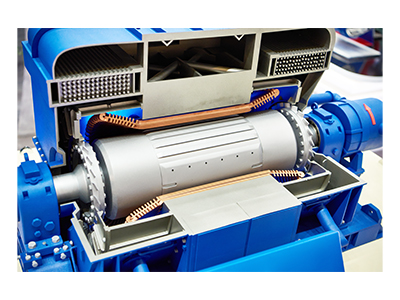
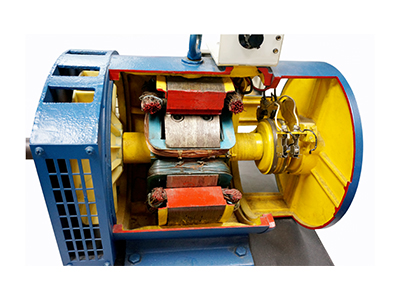
Electrical Power Generation Engineering
High-voltage AC generation requires careful thermal and safety design.
AI helps to:
- Predict power loss under variable loads
- Evaluate insulation performance
- Improve fault-tolerant designs
This strengthens system durability in demanding operating environments.
AI in Life Support System Design
Life support systems such as onboard oxygen generation require precise control and reliability.
AI-driven modeling supports:
- Oxygen purity optimization
- Energy consumption reduction
- Weight-efficient system configuration
These insights improve performance across altitude and pressure variations while meeting strict safety requirements.
Manufacturing, Inspection, and Quality Engineering
AI extends beyond design into production and quality assurance. We apply machine learning and computer vision to:
- Automated inspection of composite and metallic parts
- Detection of microdefects
- Real-time comparison with digital design models
Better consistency and decreased expensive reworking are the benefits of this process.
Engineering Challenges and Ethical AI Use
We recognize that AI adoption introduces engineering responsibility.
Key challenges in adopting AI at full scale include:
- Data quality and traceability
- Model validation and explainability
- Certification alignment with regulatory frameworks
We treat AI outputs as engineering inputs, not final decisions. Human expertise remains central to aerospace and defense technology services.
What This Means for Aerospace & Defense Companies
In 2026, the use of AI in aerospace programs is no longer a matter of choice for companies seeking to be competitive. The companies reap the benefits if they:
- Embrace AI throughout the whole process of engineering
- Use data-driven insights together with the traditional physics-based models
- Put money into digital continuity from the design phase all the way through the operation phase
Aerospace engineering services must now deliver speed, accuracy, and lifecycle value together.
Our Perspective as an Engineering Services Partner
As an engineering solutions provider, we help aerospace and defense organizations adopt AI responsibly and effectively. We combine advanced engineering expertise with top-notch analysis capabilities to support complex aerospace programs.
We focus on practical implementation that aligns with certification, safety, and performance goals. Our experience across defense and aircraft engineering services allows us to tailor engineering design and analysis solutions for every firm.
Key Takeaways
AI and machine learning will keep on developing along with the development of basic engineering tools. We expect deeper integration with digital twins, greater use of agentic AI for decision support, and expanded automation across design and operations.
The success of aerospace engineering services in the future will be determined by the extent to which we manage to pitch innovation against the discipline. If done right, AI does not replace but rather enhances the technical competence of engineers.
For the companies that have been investing in aerospace and defense technology services, 2026 will be a turning point for major transformation. In our opinion, the ones taking action now will set the pace for the next ten years in aerospace innovation.