Failures in complex systems don’t just cause technical issues they lead to downtime, safety risks, regulatory challenges, and unexpected costs. The most effective organizations don’t react to failures after they occur. They prevent them through structured risk identification and proactive safety strategies.
At Dansob, we help organizations reduce operational risk, improve system reliability, and protect performance by identifying potential failure points early in the lifecycle.
Why Failure Prevention Matters for Your Business
Unplanned failures impact more than operations. They affect revenue, timelines, and reputation.
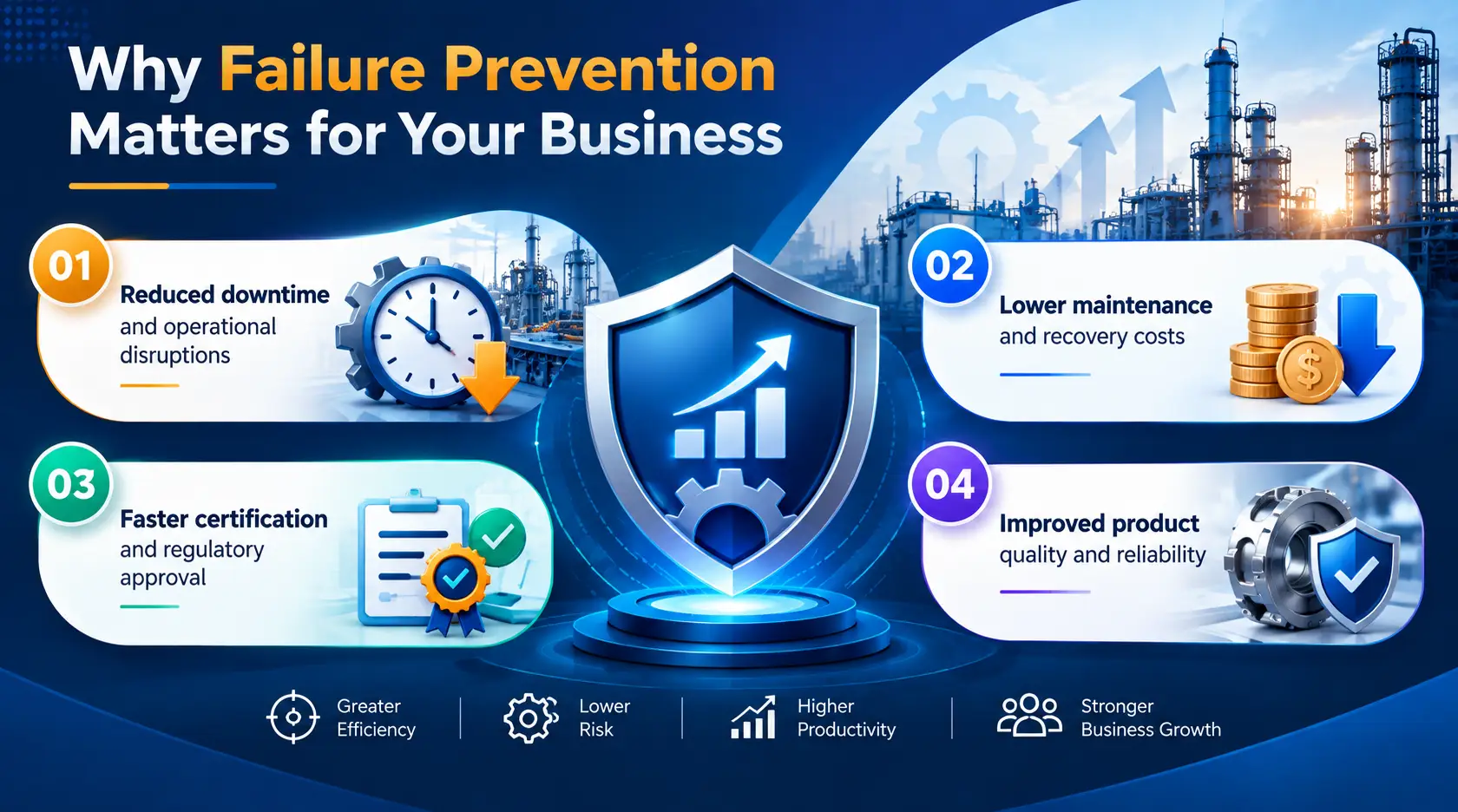
Organizations that invest in proactive failure prevention benefit from:
-
Reduced downtime and operational disruptions
-
Lower maintenance and recovery costs
-
Faster certification and regulatory approval
-
Improved product quality and reliability
-
Greater stakeholder and customer confidence
Preventing failures early is significantly more cost-effective than fixing problems after deployment.
A Proactive Approach to Failure Prevention
Effective failure prevention begins at the design stage and continues throughout development and operation. A structured approach focuses on identifying risks before they become real-world issues.
1. Early Hazard Identification
Functional and system-level analysis helps uncover potential failure conditions before detailed development begins. Addressing risks early avoids costly redesign later.
2. Failure Mode Analysis
Techniques such as Failure Modes and Effects Analysis (FMEA) identify how components or processes might fail and evaluate their impact on overall system performance.
This allows teams to prioritize corrective actions based on risk level.
3. Root Cause and Scenario Analysis
Methods like Fault Tree Analysis (FTA) and Event Tree Analysis (ETA) help engineers understand how failures occur and what consequences they may trigger.
These insights support better design decisions and stronger safety controls.
4. Risk Mitigation and Design Improvements
Based on analysis results, risks can be reduced through:
-
Design modifications
-
Redundancy and fault tolerance
-
Protective mechanisms
-
Monitoring and operational controls
The goal is to eliminate critical risks wherever possible and control those that cannot be fully removed.
Business Impact of Proactive Failure Prevention
Organizations that integrate structured failure prevention into their lifecycle typically achieve:
-
Higher system availability
-
Improved operational stability
-
Reduced lifecycle costs
-
Fewer field incidents and recalls
-
Greater long-term performance predictability
In high-risk industries, reliability and safety are directly linked to business performance.
How Dansob Supports Failure Prevention?
We works with engineering teams and program leaders to implement practical risk control strategies aligned with project goals.
Our support includes:
-
Failure mode and reliability assessment
-
Risk prioritization and mitigation planning
-
Hazard log development and tracking
-
Integration with design, testing, and validation processes
We focus on delivering actionable insights that improve both safety and operational performance.
Industries Where Failure Prevention Is Critical
Proactive risk control is essential in sectors where system failure can lead to significant operational or safety consequences, including:
-
Aerospace and defense
-
Automotive and transportation
-
Energy and power systems
-
Industrial automation and manufacturing
-
Semiconductor and high-precision technologies
Early risk management improves stability, compliance, and long-term system success.
The Strategic Advantage
Organizations that treat failure prevention as a design priority – not a late-stage fix – build systems that perform reliably under real-world conditions.
Fewer failures mean lower costs, reduced uncertainty, and stronger business outcomes.
FAQs
1. When should failure prevention begin?
Ideally during the concept and design phase, and continue throughout the system lifecycle.
2. Which methods are used to prevent failures?
Common approaches include hazard analysis, FMEA, FTA, and risk-based design improvements.
3. How does early failure prevention reduce costs?
Resolving risks during design is far less expensive than fixing failures after deployment.
4. Who benefits from these services?
Organizations developing complex or high-risk systems where reliability and safety are critical.
For a complete overview of lifecycle safety services and methodologies, explore our System Safety Services or contact us to discuss how proactive failure prevention can support your project.